
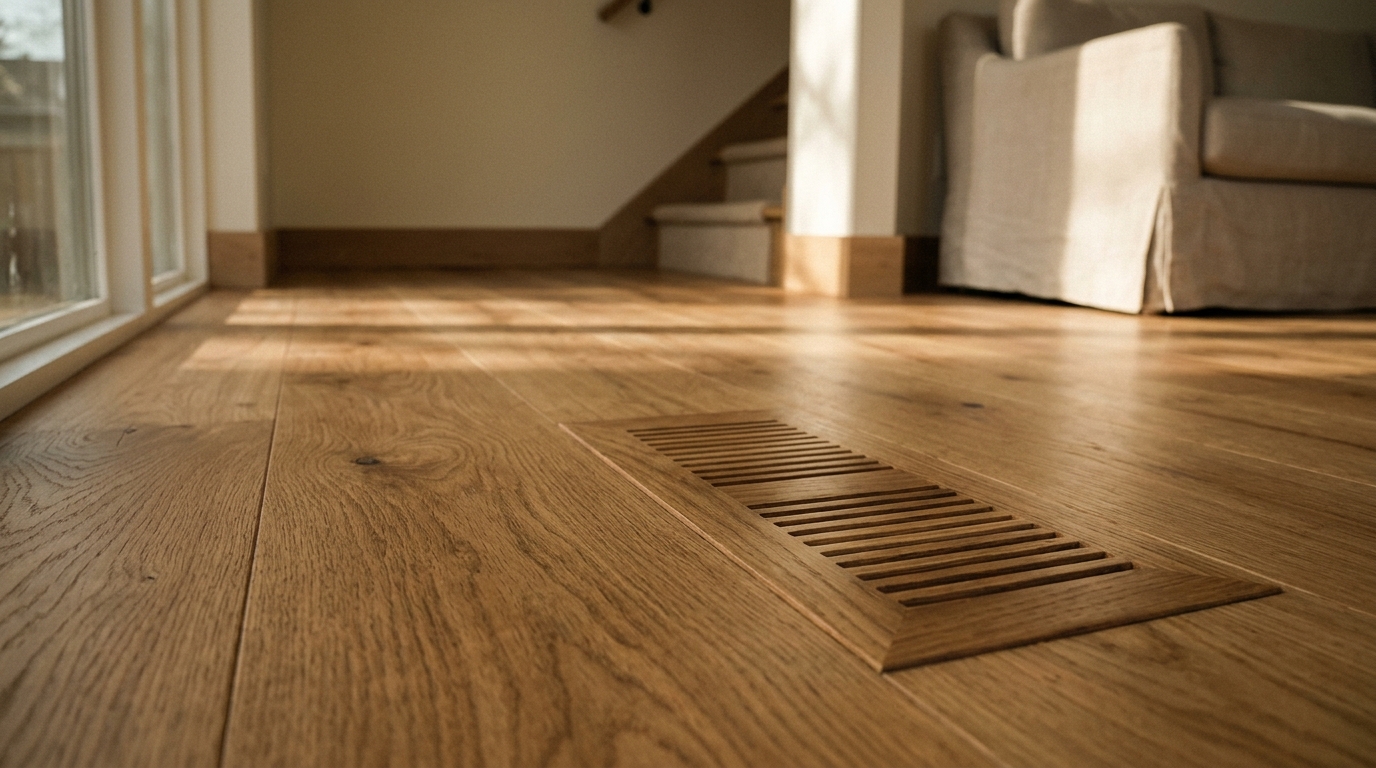
Solid hardwood floor registers are superior to metal ones for new installations because they offer seamless aesthetic integration, superior durability against foot traffic, and the ability to match existing flooring exactly. Unlike metal vents that often look industrial or mismatched, wood registers blend into the room's design while providing robust airflow. For homeowners and contractors, choosing wood ensures a premium finish that enhances property value and visual appeal.
Seamless Aesthetic Integration
The primary advantage of solid hardwood registers is their ability to disappear into the floor. A flush mount register is a ventilation cover that sits level with the surrounding flooring, creating a continuous surface. Metal registers, by contrast, often have a distinct lip or frame that breaks the visual flow of the room. When installing new hardwood floors, the goal is usually a uniform look. Wood registers allow you to match the species, stain, and finish of your flooring perfectly. This level of customization is difficult to achieve with standard metal products, which come in limited colors and textures.
For example, a home with white oak flooring can use white oak registers that are stained to match the exact shade of the planks. This creates a cohesive design that feels intentional and high-end. Metal vents, even when painted, rarely achieve this level of harmony. The result is a space that feels more finished and less utilitarian.
Durability and Structural Strength
Wood registers are engineered for strength. A solid hardwood grille is a ventilation component milled from a single piece of kiln-dried wood to maximize structural integrity. Metal registers, particularly those made from thin aluminum or steel, can bend or warp under heavy foot traffic. In high-traffic areas like hallways or living rooms, this is a significant concern. Wood registers, when properly sealed, can withstand normal body weight without deforming. This durability ensures that the vent remains functional and attractive for years.
Cape Cod Air Grilles manufactures their grilles from one solid piece of hardwood, which maximizes strength. The slots are milled horizontally along the longer dimension and with the grain of the wood. This design choice enhances the structural stability of the register. Metal vents may look sleek, but they often lack the robustness needed for long-term use in busy homes. Choosing wood means investing in a component that will last as long as the floor itself.
Airflow Efficiency and Design
Efficiency is a key factor in HVAC performance. A free air area is the total open space within a register that allows air to pass through. Wood registers can be designed with various patterns to optimize this airflow. For instance, eggcrate patterns allow for greater airflow compared to slotted designs. This makes them ideal for cold air returns where maximum air movement is required. Metal registers often have fixed designs that may not offer the same flexibility in airflow optimization.
By choosing the right wood register style, you can balance aesthetics with performance. Slotted registers are stronger and better for supply vents in high-traffic areas, while eggcrate registers are better for returns. This versatility allows for a tailored HVAC solution that meets both visual and functional needs. Metal vents do not offer this level of design flexibility, often forcing a compromise between looks and airflow.
Customization and Material Variety
One of the most compelling reasons to choose wood is the variety of available species. A custom wood register is a ventilation cover manufactured to specific dimensions and wood species to fit unique architectural requirements. Wood is available in a wide range of species, from red oak and white oak to walnut and cherry. Each species offers a different color, grain pattern, and hardness. This variety allows for precise matching to existing flooring or design preferences. Metal registers are limited to a few standard finishes, which may not complement every interior design style.
Cape Cod Air Grilles offers grilles in a wide variety of solid hardwood species. This includes options like Brazilian cherry, hickory, and quartersawn white oak. The ability to choose the exact wood species ensures that the register matches the floor perfectly. This level of customization is not possible with metal vents, which are mass-produced in limited finishes. For homeowners who care about design details, wood offers a level of control that metal simply cannot match.

Installation and Maintenance
Maintenance is also simpler with wood. Dust and debris can be easily removed with a vacuum or brush. Metal registers can accumulate dust in their crevices, which may be harder to clean. Wood registers, when properly sealed, are resistant to moisture and humidity. This makes them suitable for a variety of environments, including kitchens and bathrooms. The ease of maintenance and customization makes wood a practical choice for new installations.
Key Takeaways
- Solid hardwood registers offer seamless aesthetic integration, matching the species and finish of your flooring.
- Wood grilles are milled from solid pieces of kiln-dried hardwood, providing superior strength and durability.
- Wood registers can be designed with various patterns, such as slotted or eggcrate, to optimize airflow.
- A wide variety of wood species is available, allowing for precise customization and matching.
- Wood registers are sold unfinished, enabling you to apply the same stain and finish as your flooring.
- Proper sealing is essential to prevent warping and ensure long-term stability of wood registers.
- Wood registers are easier to maintain and clean compared to metal vents.
Frequently Asked Questions
What is the difference between a surface mount and a flush mount register?
Surface mount registers sit above the floor and are ideal for existing flooring. Flush mount registers lay flush with the floor and are best for new installations. Both styles are available in wood and offer different aesthetic and functional benefits.
Can wood registers be walked on?
Yes, wood registers up to 6 inches wide can be walked on with normal body weight. Larger registers may need to be braced or supported underneath to avoid breakage. Proper sealing is also important to prevent warping.
What wood species are available for registers?
Wood registers are available in a wide variety of species, including red oak, white oak, maple, walnut, and cherry. Each species offers a different color, grain pattern, and hardness, allowing for precise matching to your flooring.
How do I seal a wood register?
You should seal the register on each side and in between slots or squares prior to installation. Use a paint, stain, or urethane product recommended by a flooring specialist. This prevents the wood from absorbing moisture unevenly, which can cause warping or cracking.
Are wood registers more expensive than metal ones?
Wood registers are generally more expensive than metal ones due to the cost of materials and craftsmanship. However, they offer superior aesthetics, durability, and customization, making them a worthwhile investment for new installations.
Can I order custom size wood registers?
Yes, custom size wood registers are available. You can specify the exact dimensions and wood species to fit your unique requirements. Custom grilles are non-returnable, so it is important to provide accurate measurements.
Conclusion
Solid hardwood floor registers offer a superior alternative to metal vents for new installations. They provide seamless aesthetic integration, superior durability, and the ability to match your flooring exactly. For homeowners and contractors who value design and quality, wood registers are the ideal choice. Cape Cod Air Grilles offers a wide range of solid hardwood registers in various species and styles. To explore our options or request a quote, visit our quote request page or browse our photo gallery for inspiration.