
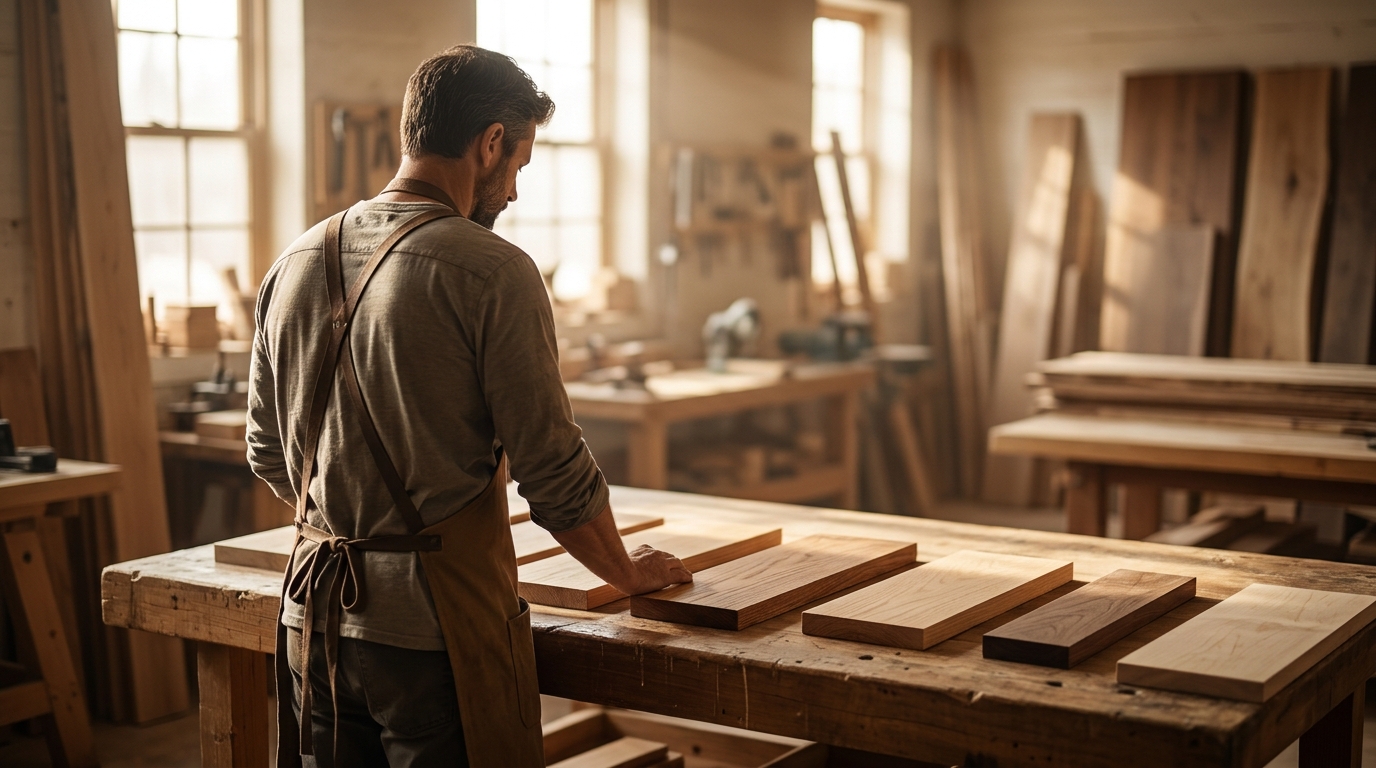
Contractors should select hardwood species based on structural stability, grain pattern, and finish compatibility. Cape Cod Air Grilles offers a wide variety of solid hardwoods, including Red Oak, White Oak, and Maple, to ensure your custom grilles match your flooring and withstand daily traffic. Choosing the right wood prevents warping and ensures a seamless aesthetic integration.
Structural Integrity and Durability
The primary function of an air grille is to manage airflow while supporting foot traffic. Structural integrity is the ability of a material to resist deformation or breakage under load. For high-traffic areas like hallways or living rooms, density and hardness are critical factors. Red Oak is a popular choice for this reason. It is a dense hardwood that handles normal body weight well. Grilles up to 6 inches wide in standard sizes can typically be walked on without bracing. However, larger custom grilles may require support underneath to avoid breakage.
Aesthetic Grain Patterns and Finish Compatibility
Beyond strength, the visual appeal of the wood must match the surrounding flooring. Grain pattern is the unique arrangement of wood fibers that defines the visual character of a species. Maple features a fine, subtle grain that takes stain evenly. It is an excellent choice for modern or minimalist interiors where a clean look is desired. American Cherry offers a warm, reddish hue that deepens over time. This species is often selected for traditional or craftsman-style homes. The natural color of Cherry provides a rich contrast against lighter flooring.
Walnut provides a dark, chocolate-brown tone with a straight grain. It is a premium option for high-end residential projects. Contractors should note that all grilles from Cape Cod Air Grilles are sold unfinished. This allows you to apply the exact stain and finish used on your flooring. Matching the finish is crucial for a seamless look. Uneven absorption of stain can lead to visible color differences. Testing a small sample of the wood species with your chosen stain is a best practice before finalizing the order.
Stability and Moisture Resistance
Wood is a hygroscopic material, meaning it absorbs and releases moisture from the air. Moisture resistance is the ability of wood to maintain its dimensional stability in varying humidity levels. Warping and cracking are common issues if grilles are not properly sealed. To prevent this, you must seal the grilles on each side and between slots prior to installation. This barrier protects the wood from uneven moisture absorption. White Oak is particularly stable due to its tight grain and natural tannins. It is often recommended for areas with fluctuating humidity.
Red Oak is slightly more porous but remains a stable choice when properly finished. Contractors should advise clients on the importance of sealing. If a grille absorbs stain or urethane unevenly, it can warp. This is a critical step that should not be skipped. The wood species you choose will influence the type of sealant required. Some woods are more forgiving than others. Understanding the specific properties of each species helps you guide clients through the installation process correctly.
Specialty Woods and Custom Applications
White Oak Quartersawn is a premium option that showcases medullary rays. This creates a distinctive ray fleck pattern. It is often used in high-end architectural details. When ordering custom grilles, you can specify any of these species. Cape Cod Air Grilles also offers stair treads in these same woods. This allows for a cohesive look throughout the home. Matching the wood species of your grilles to your stair treads and flooring creates a unified design. Contractors should consider the availability of these woods for large projects. Lead times may vary for specialty species.
Matching Flooring and Engineered Options
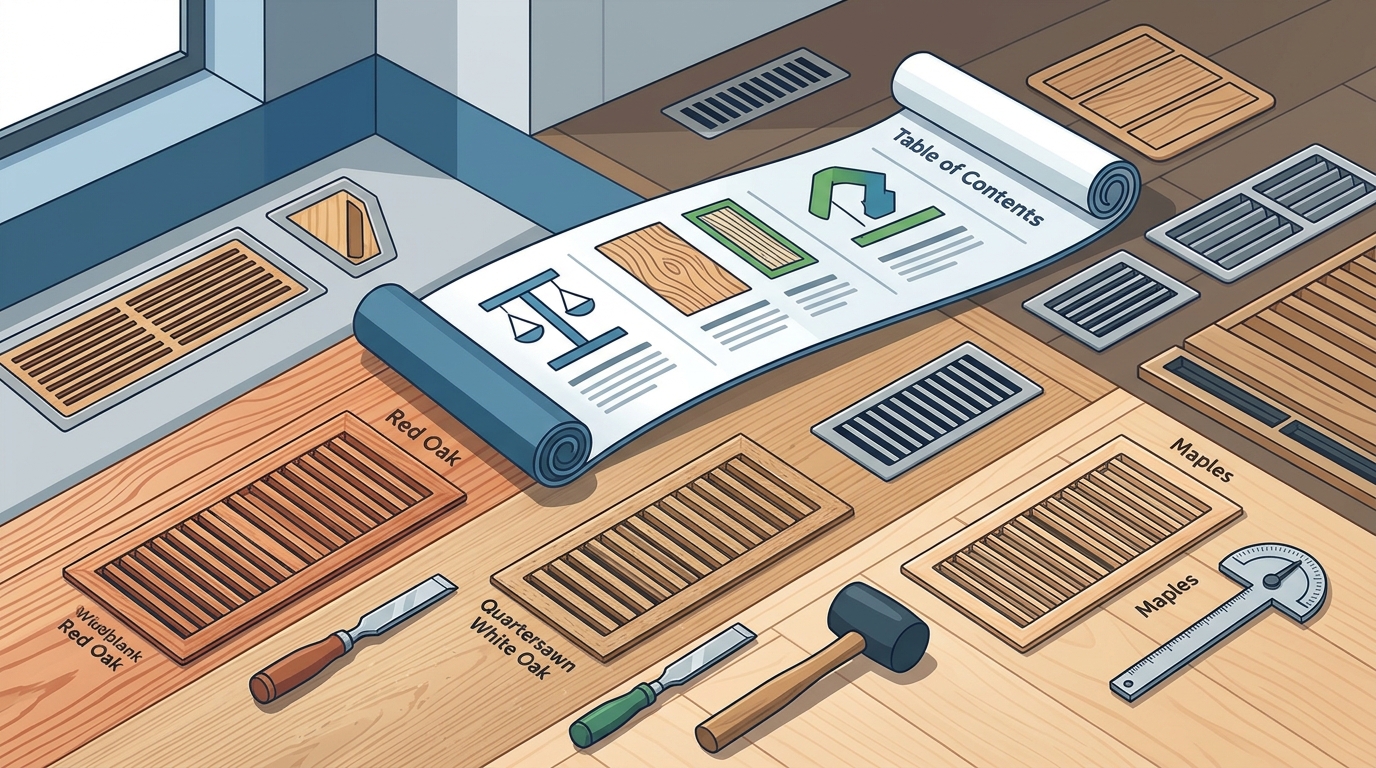
Engineered flooring is becoming increasingly popular for new installations. Engineered flooring is a multi-layer wood product with a solid hardwood top layer. It offers greater stability than solid wood in some applications. For engineered floors, Cape Cod Air Grilles offers flush mount slotted registers made from your engineered flooring. This ensures an exact match to your new floor. Due to the fillers in engineered flooring, only the slotted style is available for this application. This is a key consideration for contractors planning new floor installations.
If you are using solid hardwood flooring, you can choose any of the standard species. The goal is to create a seamless transition between the floor and the grille. Flush mount grilles lay flat with the floor, while surface mount grilles raise above it. The choice between these styles depends on your installation context. New floors typically use flush mount grilles. Existing floors often use surface mount grilles. Understanding the compatibility between your flooring type and grille style is essential for a professional finish.
Key Takeaways
- Red Oak and White Oak are the most durable options for high-traffic areas.
- Maple and Cherry offer distinct aesthetic qualities for different interior styles.
- All grilles are sold unfinished to allow for exact stain matching.
- Proper sealing is mandatory to prevent warping and cracking.
- Engineered flooring requires slotted style grilles for an exact match.
- Specialty woods like Walnut and Brazilian Cherry are available for premium projects.
- Grilles up to 6 inches wide can be walked on without bracing.
Frequently Asked Questions
What is the most durable wood for air grilles?
Red Oak and White Oak are generally considered the most durable options. They are dense hardwoods that can withstand normal foot traffic. Grilles made from these species are strong and long-lasting. They are ideal for high-traffic areas like hallways and living rooms.
Can I match my grilles to engineered flooring?
Yes, you can match grilles to engineered flooring. Cape Cod Air Grilles offers flush mount slotted registers made from your engineered flooring. This ensures an exact color and grain match. Due to the composition of engineered wood, only the slotted style is available for this application.
Do I need to stain the grilles before installation?
Yes, you should stain and seal the grilles before installation. All grilles are sold unfinished. You must apply stain and a protective sealant to match your flooring. It is critical to seal the grilles on each side and between slots to prevent warping.
What wood species are available for custom grilles?
A wide variety of solid hardwood species are available. These include Red Oak, White Oak, Maple, Southern Yellow Pine, American Cherry, Ash, Birch, Brazilian Cherry, Walnut, Fir, Hickory, and White Oak Quartersawn. You can choose the species that best matches your flooring and design preferences.
Can I walk on the grilles?
Grilles up to 6 inches wide in standard sizes can be walked on with normal body weight. Any grille larger than 6 inches will need to be braced or supported underneath. This prevents breakage and ensures safety. Always consider the size and location of the grille when planning installation.
How do I choose between slotted and eggcrate grilles?
Slotted grilles are stronger and better for high-traffic areas. Eggcrate grilles allow for greater airflow. If you want to maximize airflow to and from your system, consider eggcrate. If you need durability for foot traffic, choose slotted. You can also choose between flush mount and surface mount styles based on your flooring.
Conclusion
Selecting the right hardwood for custom air grilles is a critical decision for contractors. It impacts both the durability and the aesthetic of the final installation. By understanding the properties of each species, you can make informed choices that satisfy your clients. Cape Cod Air Grilles provides the expertise and material variety you need to succeed. To discuss your project requirements and find the perfect wood solution, request a quote.