
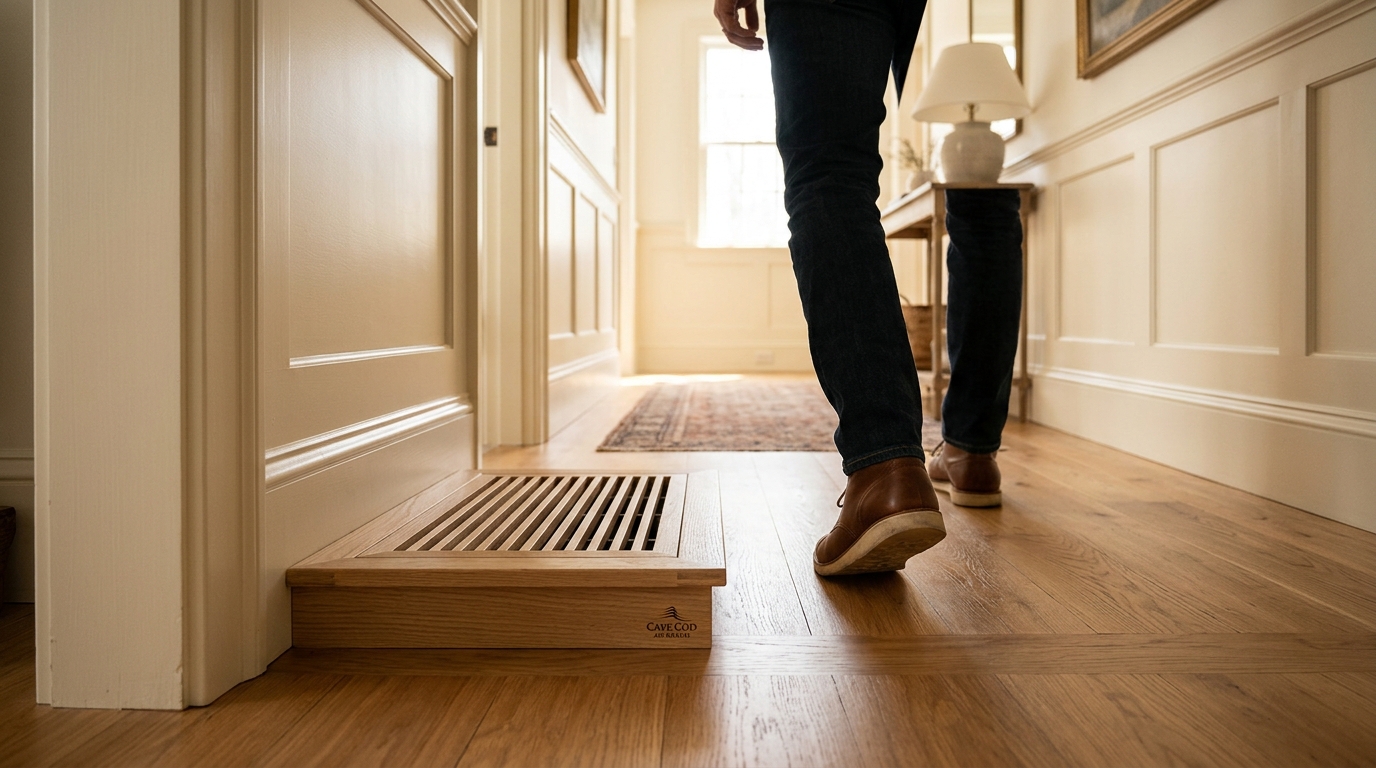
Maple is significantly harder than oak, making it the superior choice for high-traffic hallway vents. While red oak offers a classic aesthetic and moderate durability, hard maple resists dents and scratches far better under heavy foot traffic. For busy hallways where vents are stepped on daily, maple provides longer-lasting performance. Cape Cod Air Grilles offers both species in solid wood, allowing you to select the material that best balances your budget and durability needs.
Understanding Janka Hardness in Ventilation
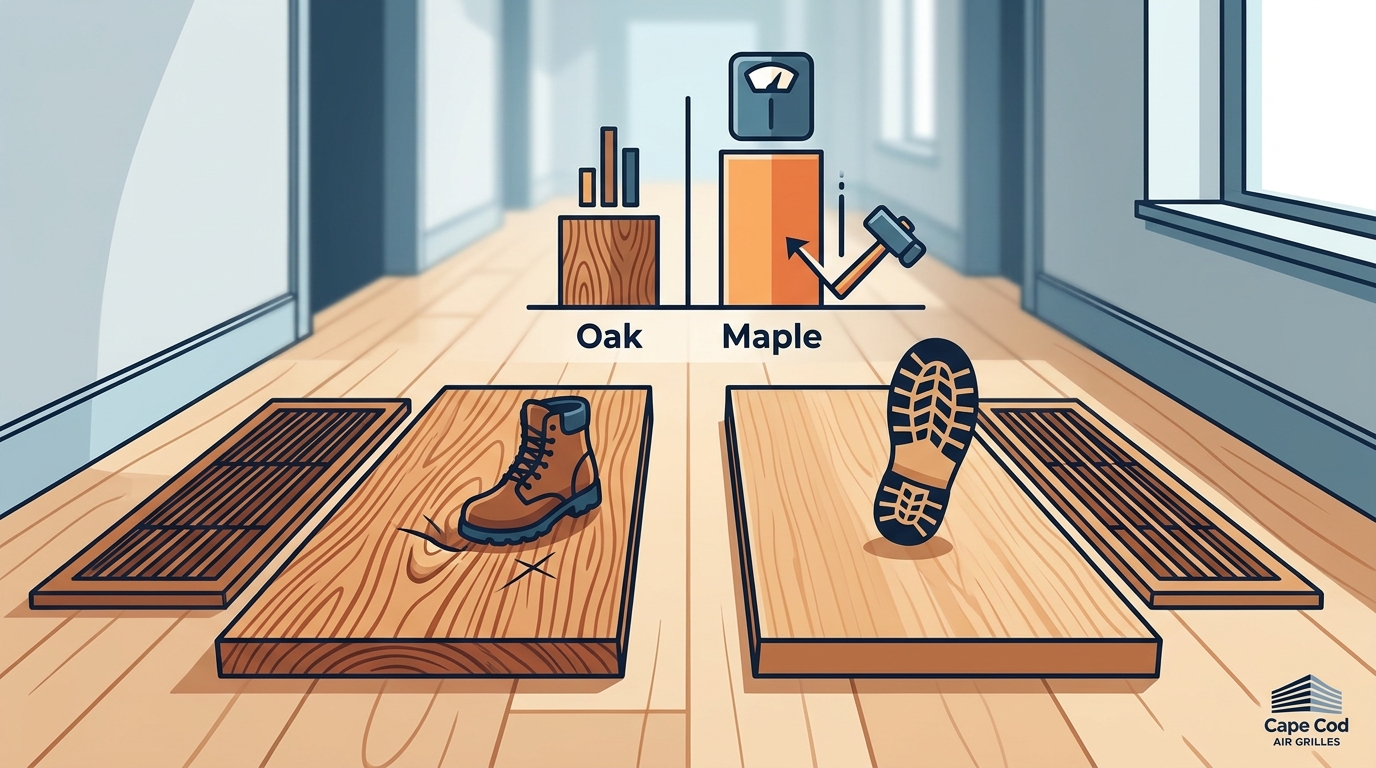
Janka hardness is a standardized measurement of the force required to embed a 0.444-inch steel ball halfway into a wood sample. This metric is the primary indicator of a wood's resistance to denting and wear. For floor vents, this rating is critical because the grille surface is subjected to direct impact from shoe heels and furniture legs. A higher Janka rating generally correlates with a longer service life in high-traffic areas.
It is important to distinguish between the structural integrity of the wood and the finish. While the wood species determines the base durability, the finish protects against moisture and stains. However, when a heavy object impacts a vent, the underlying wood's hardness is the first line of defense against permanent deformation.
Red Oak: The Classic Choice
Red oak is a traditional hardwood with a Janka hardness rating of approximately 1,290 lbf. It is a popular choice for residential flooring and vents due to its prominent grain pattern and warm color. For a hallway vent, red oak provides a solid level of durability that handles normal household traffic well.
The primary limitation of red oak in a busy hallway is its susceptibility to denting. If the hallway sees heavy foot traffic or if the vent is located near a doorway where furniture is frequently moved, red oak may show visible dents over time. It is best suited for hallways with moderate traffic where the aesthetic grain is a priority over maximum impact resistance.
Hard Maple: The Durability Leader
Hard maple is a dense hardwood with a Janka hardness rating of approximately 1,450 lbf. This makes it roughly 12% harder than red oak. For hallway vents, this difference is significant. Maple resists the daily wear and tear of foot traffic much more effectively, maintaining a smooth surface for years.
The main trade-off with maple is its subtle grain. Because the grain is less pronounced than oak, the wood has a more uniform appearance. This can be a benefit for modern or minimalist designs but may lack the character of oak. For homeowners prioritizing longevity in high-traffic zones, maple is the recommended species.
Comparison of Oak and Maple for Vents
| Criteria | Red Oak | Hard Maple |
|---|---|---|
| Janka Hardness (lbf) | ~1,290 | ~1,450 |
| Dent Resistance | Moderate | High |
| Grain Visibility | Open and Prominent | Subtle and Uniform |
| Best For | Moderate Traffic, Traditional Style | High Traffic, Modern Style |
| Cost Factor | Standard | Standard to Premium |
Choosing the Right Wood for Your Hallway
Choose Red Oak if your hallway has moderate foot traffic and you prefer a traditional look with a distinct grain pattern. It is a cost-effective option that offers good durability for standard residential use. If you are replacing existing oak vents, matching the species ensures a cohesive look.
Choose Hard Maple if your hallway is a primary thoroughfare with heavy daily traffic. The higher Janka rating ensures the vent will resist dents and scratches from constant use. It is also ideal for modern interiors where a cleaner, more uniform wood appearance is desired.
Frequently Asked Questions
Does the Janka rating change with the finish?
No, the Janka rating measures the raw wood's density and hardness. The finish adds a protective layer against moisture and stains but does not alter the underlying wood's resistance to impact. A hard maple vent will always be more dent-resistant than a red oak vent, regardless of the finish applied.
Can I mix oak and maple vents in the same hallway?
It is generally not recommended to mix species in the same room, as the grain and color differences will be noticeable. If you are replacing vents, it is best to match the existing wood species to maintain visual consistency. If you are installing new vents, choose one species for all vents in the hallway.
Is maple more expensive than oak?
Hard maple and red oak are often comparable in price, though maple can be slightly more expensive depending on the region and grade. The price difference is usually minimal compared to the long-term durability benefits of maple in high-traffic areas.
How do I know if my hallway is high traffic?
High traffic hallways are those used as primary pathways between major rooms, such as the kitchen, living room, and bedrooms. If the hallway is used multiple times a day by multiple household members, it is considered high traffic. In these cases, maple is the recommended choice for vents.