
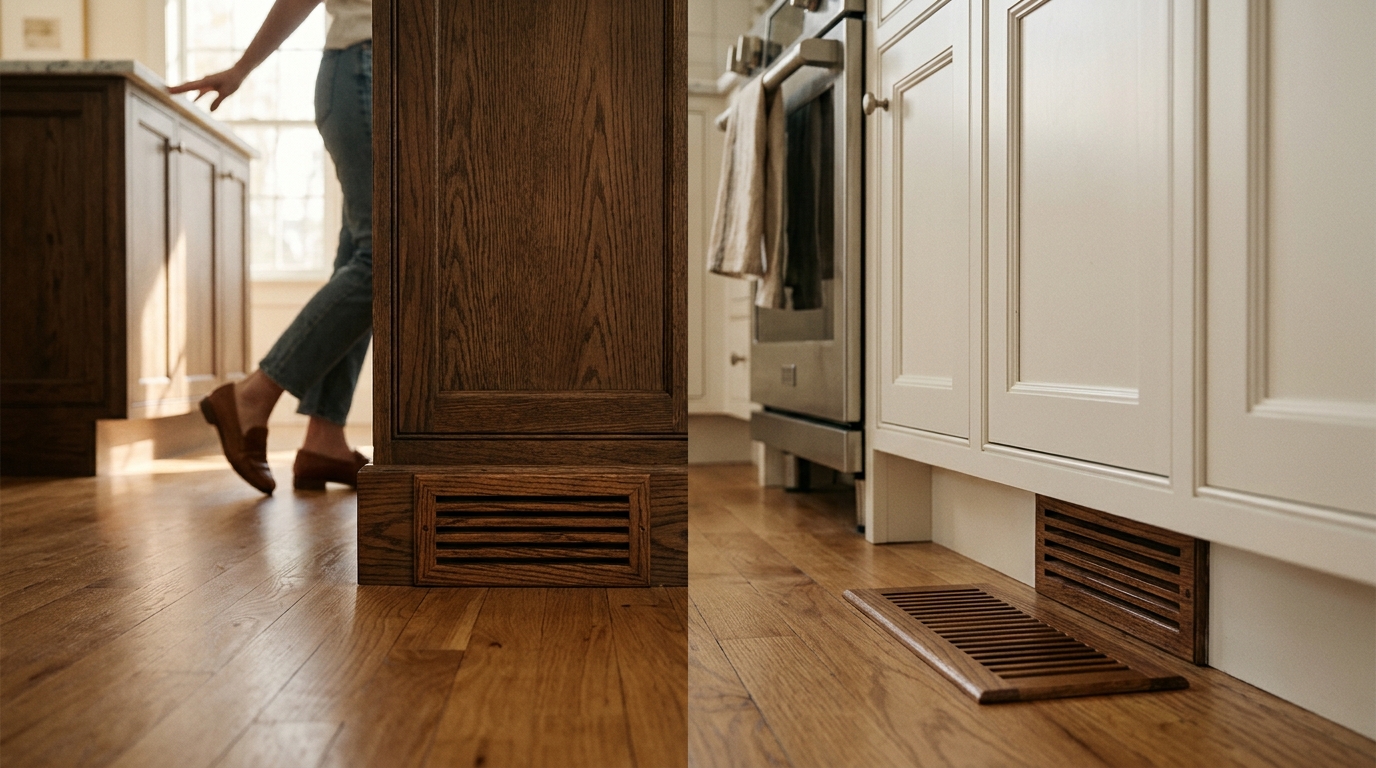
For homeowners prioritizing a seamless, organic look, stained wood toe kicks are the superior choice. They match the natural grain of hardwood registers and flooring, creating a unified aesthetic. Painted toe kicks suit specific design styles like shaker or modern minimalism but risk visual dissonance when paired with stained wood vents. Cape Cod Air Grilles recommends stained finishes for most hardwood installations to ensure long-term visual harmony.
Stained Toe Kicks: The Organic Match
Stained toe kicks are the natural companion to hardwood floor registers. A stained finish is a process that enhances the natural grain and color of the wood without hiding it. This approach allows the toe kick to blend seamlessly with the surrounding flooring and adjacent wood vents. When you choose stained wood, you preserve the tactile and visual warmth of the material. This is particularly important in living areas where the toe kick is visible from multiple angles.
Strengths of Stained Finishes
The primary strength of stained toe kicks is their ability to mimic the existing floor. If your registers are made of white oak or red oak, a matching stained toe kick creates a continuous line of wood. This continuity is a hallmark of high-end interior design. It signals that the ventilation components were considered as part of the architectural detail, not an afterthought. Stained wood also ages gracefully, developing a patina that complements the rest of the home.
Limits and Considerations
Stained wood requires careful color matching. If your flooring has a unique stain or finish, finding an exact match for the toe kick can be challenging. However, Cape Cod Air Grilles offers a wide variety of solid hardwood species, allowing for precise matching. The main limit is that stained wood cannot be easily repainted later without significant sanding. If you plan to change your design style drastically in the future, stained wood is less flexible than painted options.
Who It Suits
Stained toe kicks suit homeowners with traditional, transitional, or modern organic interiors. They are ideal for those who have invested in high-quality hardwood flooring and want their ventilation components to reflect that investment. If your registers are stained, your toe kicks should almost always be stained to maintain visual consistency.
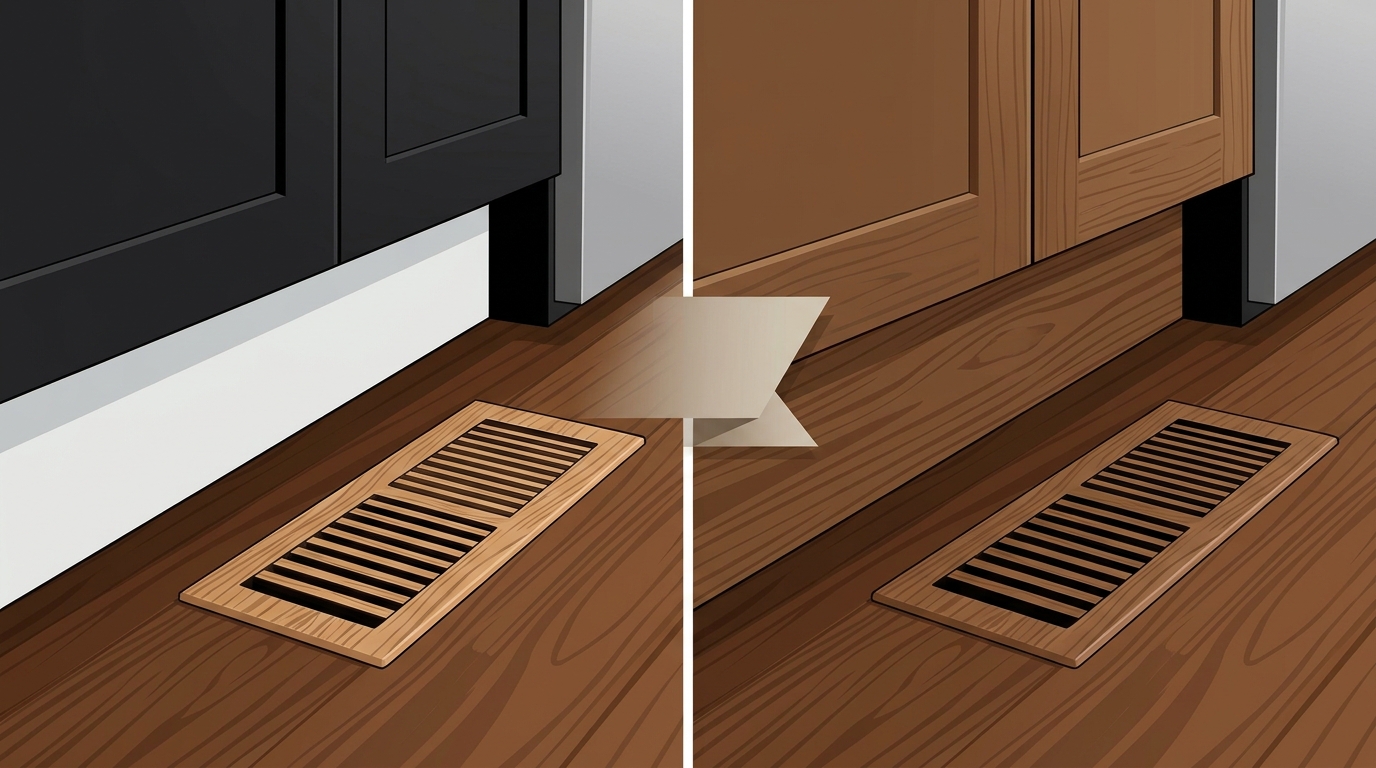
Painted Toe Kicks: The Design Statement
Strengths of Painted Finishes
The main strength of painted toe kicks is their versatility in color. You can match them to your cabinetry, walls, or trim for a cohesive look in specific rooms. This is particularly useful in kitchens where the toe kick is part of the cabinet structure. Painted finishes are also easier to touch up if scratched or chipped. A simple coat of paint can restore the appearance without the need for sanding and staining.
Limits and Considerations
The primary limit of painted toe kicks is their potential to disrupt the flow of wood tones. If your floor registers are stained wood, a painted toe kick can look like a foreign object. This is especially true if the paint color does not match the trim or cabinetry perfectly. Painted wood can also feel less premium than stained wood, as it hides the natural beauty of the material. For this reason, Cape Cod Air Grilles advises caution when mixing painted toe kicks with stained registers.
Who It Suits
Painted toe kicks suit homeowners with shaker, modern, or contemporary interiors where cabinetry is painted. They are best used in rooms where the toe kick is part of a painted cabinet system. If your registers are also painted or metal, painted toe kicks are a logical choice. However, if your registers are stained wood, consider whether the visual contrast is intentional and well-executed.
Comparison Table
| Criteria | Stained Toe Kicks | Painted Toe Kicks |
|---|---|---|
| Visual Harmony with Stained Registers | Excellent | Poor to Fair |
| Color Matching Flexibility | Limited to Wood Tones | High (Any Color) |
| Touch-Up Ease | Moderate (Sanding Required) | Easy (Paint Over) |
| Perceived Premium Quality | High | Moderate |
| Best For | Organic, Traditional, Transitional | Shaker, Modern, Painted Cabinets |
Decision Guide: Choose Stained or Painted
Choose Stained Toe Kicks If
Choose stained toe kicks if your floor registers are made of stained hardwood. This ensures that the wood tones flow seamlessly from the floor to the ventilation components. It is also the right choice if you want to highlight the natural beauty of the wood species. Stained toe kicks are ideal for homeowners who view their ventilation components as architectural details rather than functional necessities.
Choose Painted Toe Kicks If
Choose painted toe kicks if your cabinetry is painted and you want the toe kick to match the cabinets. This is common in kitchens and bathrooms. It is also a good choice if your registers are painted or metal, as this avoids the visual clash of mixing painted wood with stained wood. If you are unsure, consider the overall color palette of the room. If the room is dominated by painted surfaces, painted toe kicks may be more cohesive.
Frequently Asked Questions
Can I paint a stained toe kick later?
Yes, but it requires significant preparation. You must sand the stained surface to remove the finish and create a smooth base for the paint. This is a labor-intensive process that may not be worth it if you are only changing the color. It is generally easier to replace the toe kick with a painted one if you decide to switch styles.
Do painted toe kicks look cheap next to stained registers?
They can, if the colors do not match well. A painted toe kick next to a stained register can look like a mismatched piece of furniture. To avoid this, ensure that the paint color matches your trim or cabinetry exactly. If the contrast is intentional and well-executed, it can look modern and stylish. However, for most homeowners, stained toe kicks provide a more cohesive look.
What wood species is best for stained toe kicks?
The best wood species is one that matches your flooring. Cape Cod Air Grilles offers a wide variety of solid hardwood species, including red oak, white oak, maple, and walnut. Choose the same species as your registers to ensure a perfect match. If your flooring is a unique species, consult with a professional to find the closest match.
Are painted toe kicks more durable than stained ones?
Both are durable, but they fail differently. Painted finishes can chip or peel, while stained finishes can scratch or wear. Painted finishes are easier to touch up, but stained finishes are more resistant to moisture. For high-traffic areas, consider the specific conditions of your home. In kitchens, painted toe kicks may be easier to maintain, while in living rooms, stained toe kicks may last longer.
Can I mix painted and stained toe kicks in the same room?
It is generally not recommended. Mixing painted and stained toe kicks in the same room can create a disjointed look. If you have different rooms with different design styles, you can use painted toe kicks in one room and stained toe kicks in another. However, within a single room, consistency is key to a polished appearance.